The boundary between a secure, lasting fence and a costly, failing one often hinges on a single, critical interface: the connection between post and wall. For decades, the industry has grappled with the inherent challenges of this junction—managing lateral loads, compensating for material incompatibility, and preventing water ingress that leads to structural decay. Traditional methods, often reliant on improvised brackets or through-bolts without proper planning, have resulted in a litany of failures: sagging fences, cracked masonry, and the persistent cycle of repair. This article examines the sophisticated engineering and precise methodology required to transform this perennial pain point into a paragon of durability.
A Tale of Two Terraces: The Scenario of Securing a Precious View
Imagine a homeowner on a hillside property, their terraced garden offering a breathtaking urban panorama. Their desire to install a transparent glass panel fence to preserve this view is met with a formidable obstacle: a century-old stone retaining wall forms the only possible foundation. Drilling into its historic, irregular fabric feels invasive and risky. Here, the abstract challenge of “attachment” becomes emotionally charged—it is about safeguarding a vista, respecting heritage, and ensuring the safety of family gatherings on that very terrace. The solution cannot be a brutish array of raw bolts; it demands a system that is both immensely strong and delicately precise, a hidden framework that provides unwavering security without visual compromise. This scenario encapsulates the core mission: achieving absolute structural integrity while navigating the physical and aesthetic constraints of the existing wall.
Engineering the Interface: A Deconstruction of Load Paths and Components
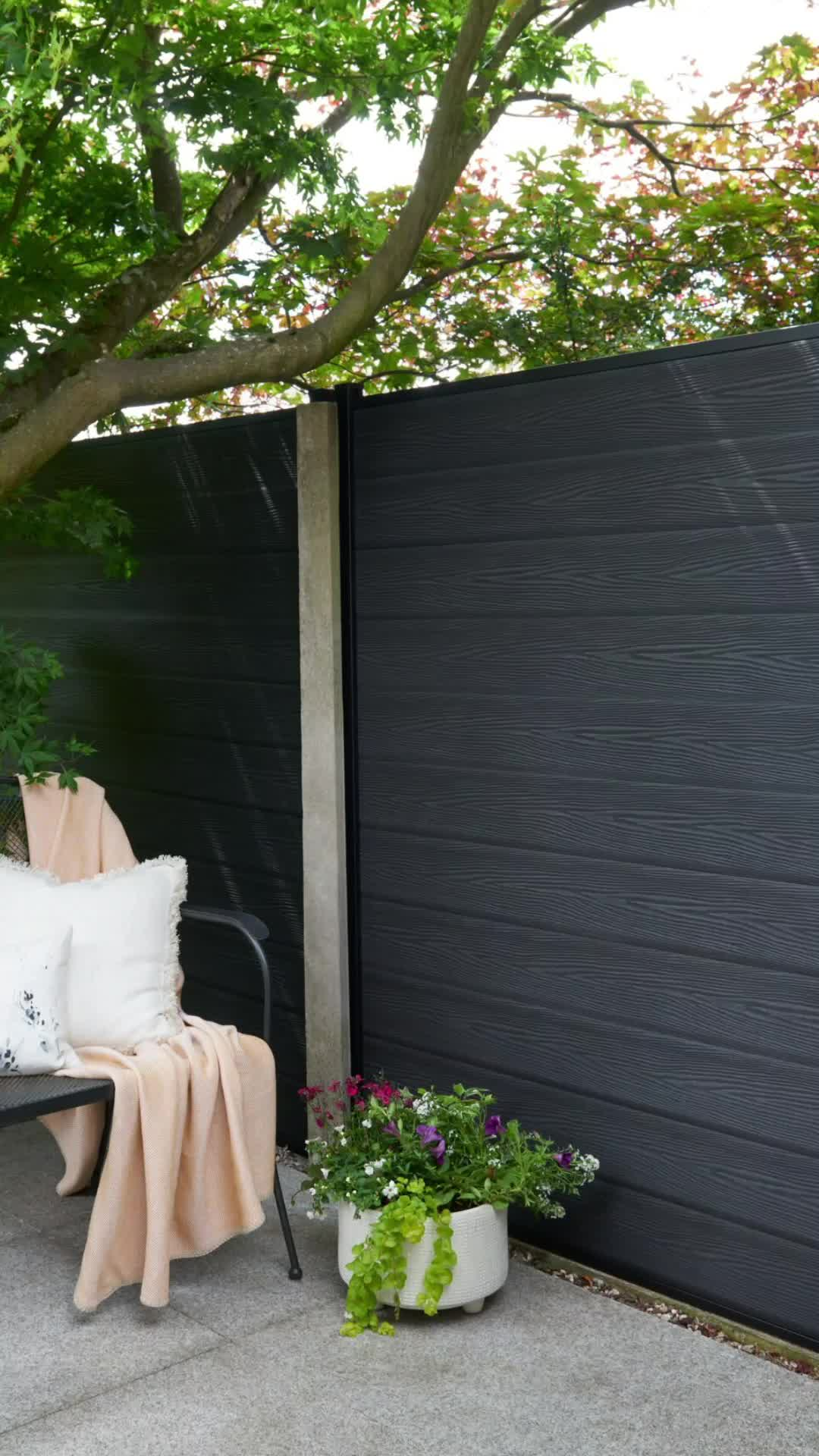
To understand a proper wall-mounted post system, one must dissect it like a mechanical assembly. The core principle is the creation of a continuous, managed load path from the fence panel down into the wall’s solid substrate. This begins with a high-grade stainless steel or hot-dip galvanized bracket, engineered with a specific offset to create space for drainage and panel alignment. The fasteners are not mere screws; they are chemical anchors or mechanical bolts, selected based on a substrate analysis—whether solid concrete, hollow block, or vintage masonry. The post itself, often a sleek square hollow section, is not simply welded to the bracket. The connection is calculated to resist overturning moments, with internal stiffeners sometimes employed to prevent torsion. Crucially, the system incorporates waterproof shims and sealants at the bracket-wall junction, forming a primary defense against capillary action and corrosion, the silent killers of metal-to-masonry connections.
The Future of Boundary Integration: From Fixed Points to Adaptive Systems
Looking forward, the discipline of attachment is evolving from a static fixing task to a domain of integrated, smart boundary systems. We are moving towards engineered aluminum extrusion profiles with internal channels that conceal wiring for integrated LED lighting or low-voltage sensors, where the wall bracket becomes a powered junction box. Advances in composite materials promise posts and brackets with the strength of steel but without thermal bridging or corrosion concerns. Furthermore, the rise of digital fabrication allows for custom, non-standard bracket geometries to be economically produced, enabling flawless integration with complex, algorithmically-designed facades. The future attachment is not just about holding a fence up; it is about creating a seamless, multifunctional, and intelligent edge condition that responds to environmental data and user interaction, blending infrastructure with architecture.
Attaching a fence post to a wall is a microcosm of modern construction philosophy. It demands a forensic understanding of existing substrates, a rigorous application of structural engineering principles, and a thoughtful consideration of long-term performance and aesthetics. It bridges the emotional need for security and beauty with the uncompromising realities of physics and material science. By moving beyond makeshift solutions and embracing a systems-based approach—encompassing precise hardware, correct installation protocols, and forward-looking material integration—this critical junction can be transformed from a common failure point into a testament to durable, intelligent design. The result is not merely a fastened post, but a guaranteed boundary, engineered for permanence.